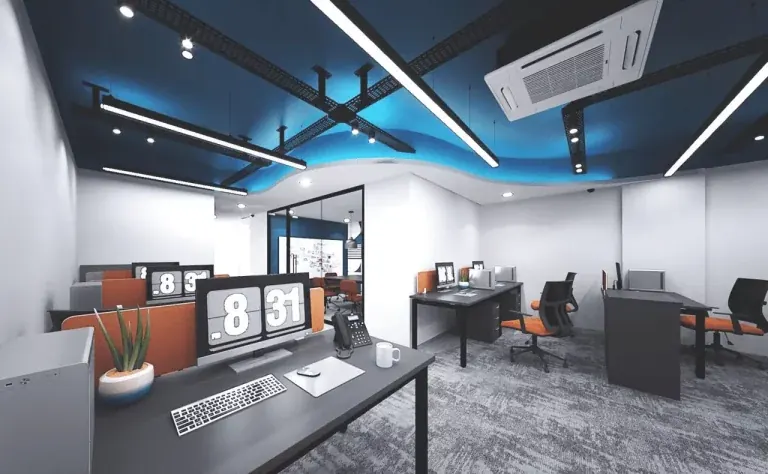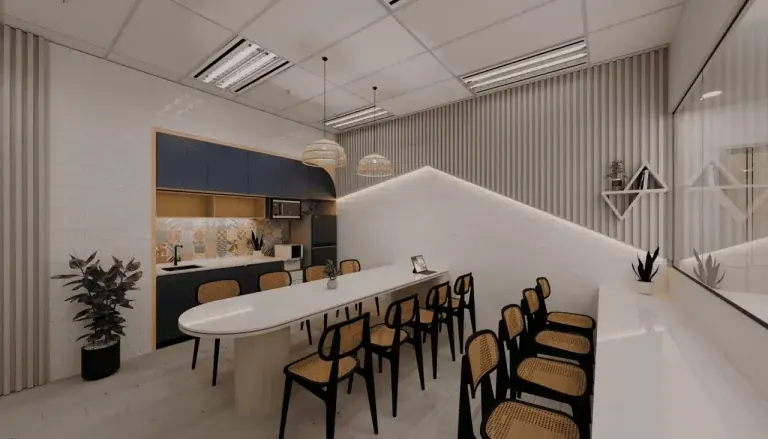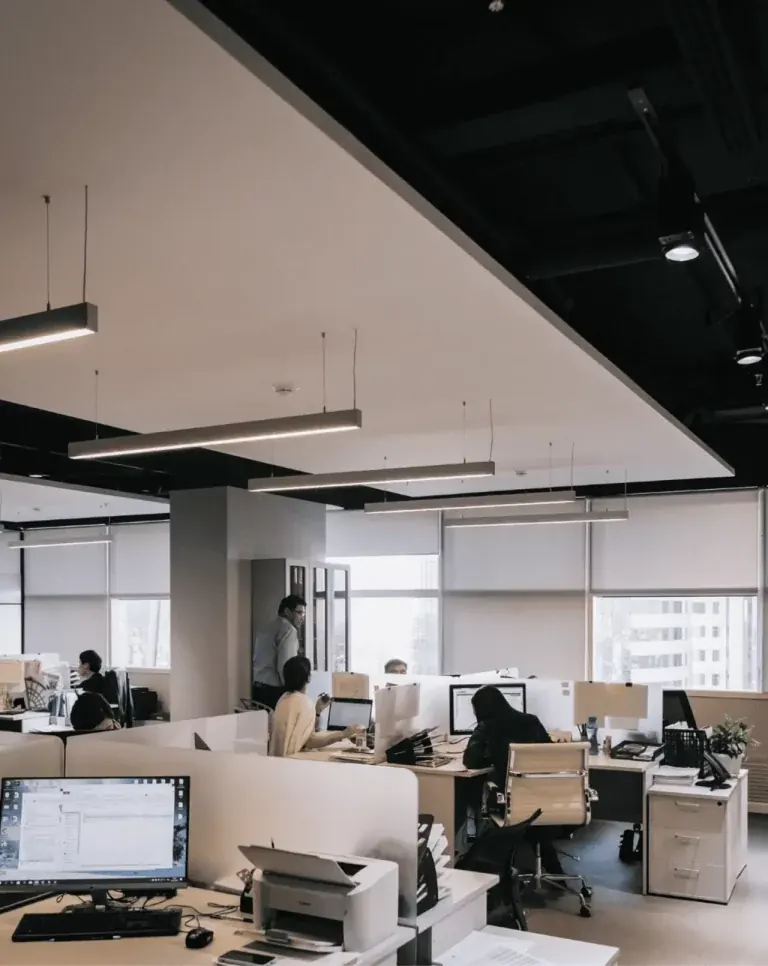
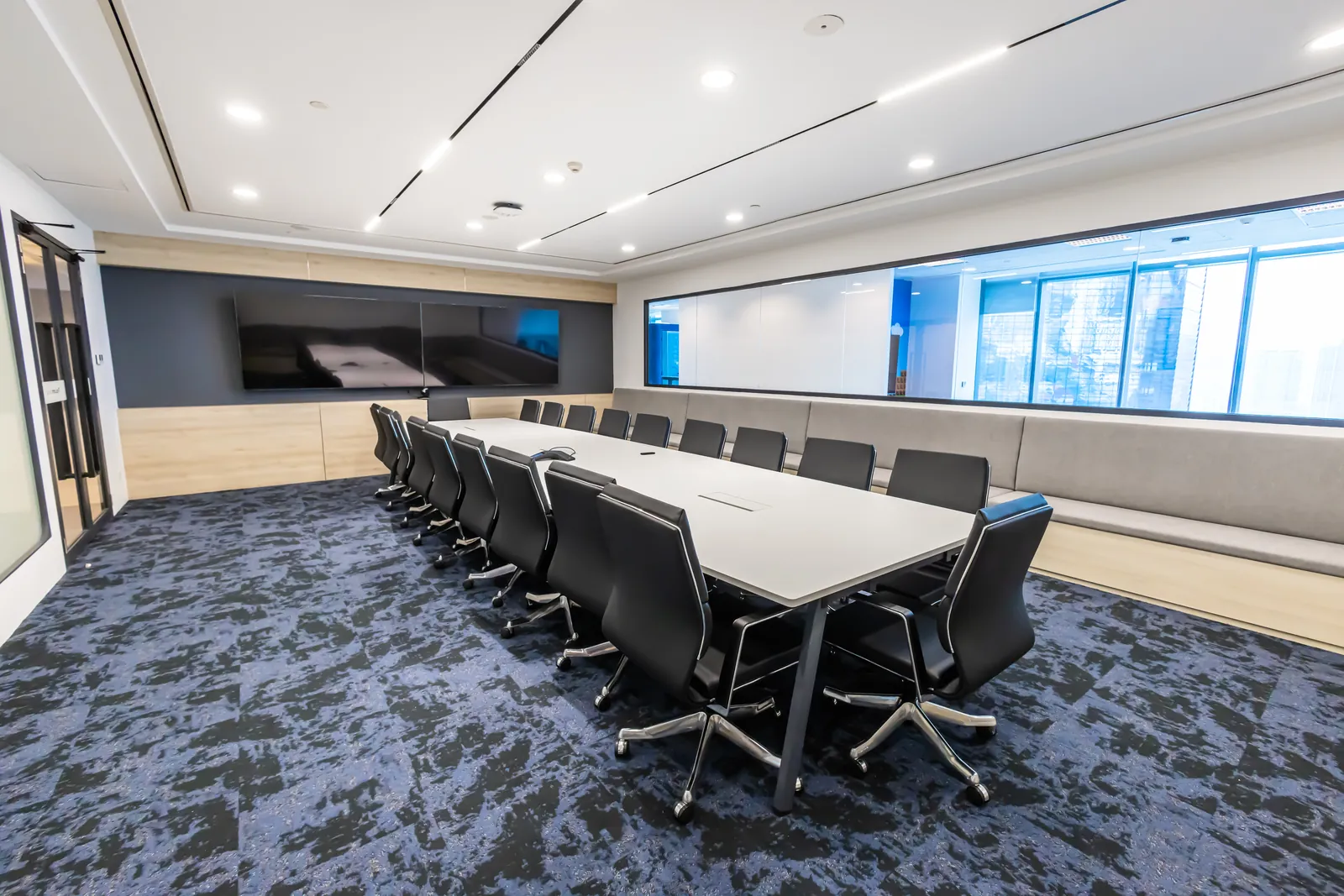
Every office designer’s website looks good. Glossy images, warm lighting and empty desks are easy to produce in 2026, whether by a photographer, a 3D artist or an AI image tool. That makes the usual advice, “look at their portfolio”, less useful than it sounds.
It also matters more than it used to. Purpose-built office occupancy in Kuala Lumpur sat at 70.1% in Q3 2024, per a market report covered by the NST. Tenants have room to move, and many are relocating or refitting. More fit-outs means more firms calling themselves the best interior designers for office work, and more portfolios to sort through.
This guide is for Malaysian business owners, office managers and HR or facilities leads who need to shortlist a designer. It covers:
- What an office portfolio must prove, and why it differs from a home designer’s.
- Four short datasets: a scorecard, an evidence grid, workplace research and a worked comparison.
- The questions and red flags that turn a nice gallery into real proof.
We write as CTN Interior Solutions, an office-only interior design and build firm in Petaling Jaya that has worked with 100+ clients since 2001. We get judged by portfolio every week, so we know which parts are easy to polish and which are not.
Want to see what an office-only portfolio looks like?
Read how our Petaling Jaya team has focused on offices since 2001, from first brief to after-sales service. Meet our office design specialists →
First, a short video from an interior designer on what to weigh up when hiring one: budget, experience and personality.
How to choose an interior designer… Budget, experience, personality….
Source video: Design Loves Detail on YouTube
1What Makes the Best Interior Designers for Office Work Different?
Quick Answer: The best interior designers for office work plan for people at work, not people at home. Their portfolio should show workstations for a known headcount, meeting rooms that fit real teams, and services such as air-con, sprinklers and data points built in. A home designer’s portfolio shows taste; an office designer’s must show function at scale.
The video covers hiring in general, but an office brief adds things a home never has. Here is how the two portfolios should differ:
| What to look for | Home designer portfolio | Office designer portfolio |
|---|---|---|
| Main subject | Living rooms, kitchens, bedrooms | Work floors, meeting rooms, pantries, reception |
| Scale | One family | 10 to 500+ staff, often one floor or more |
| Key drawing | Mood board and furniture plan | Space plan with desk count and circulation |
| Technical work | Lighting and cabinetry | Air-con zones, sprinklers, power and data, fire exits |
| Approvals | Usually management only | Building management, often council and Bomba |
| Proof of success | Owner likes it | Staff use it daily and the business still fits in it |
So the first filter is simple: count the offices. If most projects are condos and landed homes, the firm may be talented but it is not one of the best interior designers for office jobs. Our guide to choosing between a freelancer, a studio or a design and build firm explains which kind of firm suits which size of office.
2What Should an Office Interior Design Portfolio Prove?
Quick Answer: An office interior design portfolio should prove four things. The projects were built, they work for a known number of people, the designer handled the technical and approval side, and past clients will vouch for the result. Our illustrative scorecard gives 75 of 100 points to that proof and only 5 to visual style.
To judge the best interior designers for office work, we weighted each item by how hard it is to fake. Anyone can make a lovely image; few can show a floor plan, a sprinkler layout and a happy client for the same project.
| What the portfolio shows | Weight | Points |
|---|---|---|
| Photos of built, occupied offices | 25 | |
| Brief-to-result story for each project | 20 | |
| Floor plans with headcount and area | 15 | |
| Evidence of M&E and approval work | 15 | |
| Range of office sizes and sectors | 10 | |
| Past clients you can call or visit | 10 | |
| Visual style that suits your brand | 5 |
Illustrative scorecard by CTN Interior Solutions, 2026. Weights reflect how hard each item is to fake, not survey data.
Style earns only 5 points because a good designer adapts style to your brand. If every project in a portfolio looks the same, that is a signature, not a skill. Our complete guide to office interior design in Malaysia covers what happens at each stage, which helps you know what evidence to ask for.
3How Can You Tell a Render From a Real Office Photo?
Quick Answer: Look for the building’s working parts. Real office photos show sprinkler heads, air-con diffusers, exit signs, power points, cable trays and slight wear. Renders often show perfect symmetry, repeated textures and no services at all. When in doubt, ask the designer to label which images are renders and which are photos.
Even award judges get caught out. In 2019, a shortlisted interior in the Dezeen Awards was disqualified after a reader spotted the images were renders, from repeated carpet patterns and identical curtain positions. If experts can miss it, a busy office manager can too.
Signs you are looking at a built office:
- Ceiling services are visible. Sprinklers, smoke detectors, diffusers and light fittings sit in a real grid.
- Exit signs and fire equipment appear. A real office must show them; renders usually leave them out.
- Cables are managed, not missing. Desks have power and data, and you can see where it comes from.
- Small flaws exist. Real joints, slight reflections and lived-in details are hard to fake well.
Renders are not bad; they are how every project starts. The issue is only when a render is presented as finished work. A firm that runs the office fit-out itself will usually have both: the render it showed the client and the photo of what got built.
4What Does Each Kind of Portfolio Evidence Actually Prove?
Quick Answer: Each kind of evidence proves something different. A render proves only the look. A photo with staff at work proves the office was built and used. A floor plan proves function. A call with the past client is the only evidence that proves budget, timeline and satisfaction. You need several types to see the full picture.
We rated six common kinds of evidence against five things you want to know about any office designer.
| Evidence | Looks | Was built | Works daily | Budget & time held | Client happy |
|---|---|---|---|---|---|
| 3D render or AI image | 5 | 1 | 1 | 1 | 1 |
| Professional photo, empty office | 5 | 4 | 2 | 1 | 1 |
| Photo with staff at work | 4 | 5 | 4 | 1 | 2 |
| Floor plan with headcount | 1 | 3 | 5 | 2 | 1 |
| Site visit to a finished office | 4 | 5 | 5 | 2 | 3 |
| Call with the past client | 2 | 4 | 4 | 5 | 5 |
Illustrative rating by CTN Interior Solutions, 2026. 1 = proves almost nothing, 5 = strong proof.
Read the grid by column. No single row scores well across all five, which is why the best interior designers for office projects offer more than a gallery. Budget and timeline are the hardest to prove, so save your reference call for them. When you later compare three office design quotes fairly, these same gaps show up as vague lines in the quote.
5Which Questions Turn a Portfolio Into Proof?
Quick Answer: Pick two portfolio projects close to yours in size. Ask the same eight questions about each, from headcount and floor area to approvals, changes after move-in, and access to the client. Clear, specific answers turn pictures into proof.
Ask the best interior designers for office work these questions about each project, not about the firm in general. General answers are easy to polish; project answers are not.
- How many staff was it planned for? This tells you whether the layout was built around real numbers.
- What was the floor area? Compare it with yours. Planning 2,000 sq ft and 20,000 sq ft are different jobs.
- How long was it on site? A realistic answer shows the firm tracks its own projects.
- What exactly did your firm do? Design only, design and build, or furniture supply? Many portfolios mix these.
- Which approvals did you handle? Building management, the local council or Bomba fire-safety requirements.
- What did you change after move-in? Good firms remember the snag list and how they fixed it.
- Can I speak to the client? One call is worth ten photos.
- Can I visit the office? Ten minutes on a working floor shows noise, light and comfort.
For a wider list covering fees, contracts and warranties, see our 15 questions to ask an office interior designer. Fire safety is enforced by Bomba, so an honest answer to question five matters as much as any photo.
Shortlisted a few designers and not sure how to judge them?
Our consultants can review your brief, floor plan and headcount before you commit to anyone. Book an office design consultation →
6Does a Better Office Design Really Change How People Work?
Quick Answer: Yes, and it is why portfolio quality matters. Only 26% of office workers strongly agree their workplace helps them do their best work, per the Gensler Global Workplace Survey 2025. Among staff who like their workspace, 90% are proud of their company, against 47% of those who feel disconnected from it.
These figures come from more than 16,000 office workers in 15 countries. They show what the best interior designers for office projects should be solving for.
| Finding | Share | Note |
|---|---|---|
| Workers who strongly agree their workplace helps them do their best work | 26% | Low bar for most offices |
| Workers who want a “corporate” workplace experience | 14% | Most want something else |
| Workers who rank natural light and operable windows as a priority | 40% | Top physical request |
| Workers who prefer spaces with greenery | 36% | Close behind light |
| Employees who like their workspace and are proud of their company | 90% | 47% among those disconnected from their space |
Source: Gensler Global Workplace Survey 2025 (16,000+ office workers, 15 countries, 10 industries).
Two lessons for judging a designer. First, only 14% of workers want a “corporate” feel, so a portfolio of identical grey floors may be out of step. Second, natural light and greenery top the wish list, so look for projects that kept windows open to the floor rather than lining them with rooms. A workplace design and build team should be able to explain how each project handled daylight and planting.
7How Do You Compare Shortlisted Office Designers Side by Side?
Quick Answer: Score every shortlisted designer on the same scorecard, using only evidence you have seen. In our illustrative example, a render-led studio scores 47, a freelancer 40, and a design and build firm 83 out of 100. The gap comes from proof of building and approvals, not from how good the pictures look.
Here is the scorecard applied to three hypothetical designers, each strong in a different way.
| Criterion (max points) | Designer A: render-led studio | Designer B: freelancer | Designer C: design & build firm |
|---|---|---|---|
| Built office photos (25) | 10 | 15 | 22 |
| Brief-to-result story (20) | 14 | 6 | 16 |
| Floor plans and headcount (15) | 6 | 4 | 13 |
| M&E and approval evidence (15) | 3 | 2 | 13 |
| Range of sizes and sectors (10) | 5 | 3 | 8 |
| Callable past clients (10) | 4 | 6 | 8 |
| Visual style (5) | 5 | 4 | 3 |
| Total (100) | 47 | 40 | 83 |
Illustrative scenario by CTN Interior Solutions, 2026. Three hypothetical designers, not real firms.
Notice that Designer A wins on visual style and still finishes far behind. That is the most common trap when people search for the best interior designers for office projects: the prettiest portfolio is not always the most proven.
- Use the same evidence for all. If you visited one firm’s site, try to visit the others too.
- Score before you see prices. Fees can bias how you read a portfolio.
- Plan the space first if you can. A test-fit before you lease gives every designer the same brief to respond to.
8Which Red Flags Should Rule an Office Designer Out?
Quick Answer: Rule a designer out if the portfolio has no office projects, no labelled renders, no floor plans, or no client you can call. Other warning signs include vague answers on approvals and every project looking the same. One red flag needs a question; two or more usually means walk away.
- Unlabelled renders. Images shown as finished work that turn out to be 3D or AI images.
- Mostly homes. A few offices mixed into a residential portfolio.
- No plans, only pictures. No sign of how many people the space was built for.
- Unclear role. The firm cannot say whether it designed, built or only supplied furniture.
- Silence on approvals. No mention of building management, council or fire-safety work.
- No references. Every past client is “confidential”.
One more test: ask what happened after handover. The best interior designers for office fit-outs keep looking after the space once staff move in. Our article on what an office interior design company does after handover explains what that support should include. And a clear office design brief helps you spot which designer actually listened.
9Conclusion: Choosing the Best Interior Designers for Office Projects
Quick Answer: The best interior designers for office projects are the ones whose portfolios prove the work was built, used and supported. Look past the images, score every firm on the same evidence, ask project-level questions and visit one finished office. That process protects your budget far better than any gallery.
Your job is to read it like a buyer: what was built, for how many people, with which approvals, and would the client hire them again? If a designer can answer all four with evidence, you have found a strong partner.
10Frequently Asked Questions
1. How do I find the best interior designers for office projects in Malaysia?
Start with firms whose portfolios are mostly offices. Shortlist three and score each on the same evidence: built photos, floor plans, technical and approval work, and callable clients. Visit one finished office before you choose.
2. How many projects should an office designer’s portfolio show?
Quality matters more than quantity. Look for at least two or three office projects close to your size and sector, each with photos of the built space, a floor plan and a client you can contact. Ten renders tell you less than one documented project.
3. Is it a problem if a portfolio uses 3D renders?
No, as long as they are labelled. Renders are how every office project starts. The problem is renders presented as finished work. Ask the designer to show a render and a photo of the same built project side by side.
4. Should I visit an office the designer has completed?
Yes, if you can. Ten minutes on a working floor shows noise, light, comfort and build quality that no photo captures. If a visit is not possible, ask for a call with that client instead.
5. Does a design and build firm always have a better portfolio?
Not always, but it usually holds more proof, because one team designed and built each office. Check that the firm delivered the projects shown and can explain the approvals and after-sales support for each.
Want to see real office projects, not just renders?
Tell us your headcount, location and move-in date. Our Petaling Jaya team will walk you through comparable office projects and how we would plan yours.
Talk to our office design team →