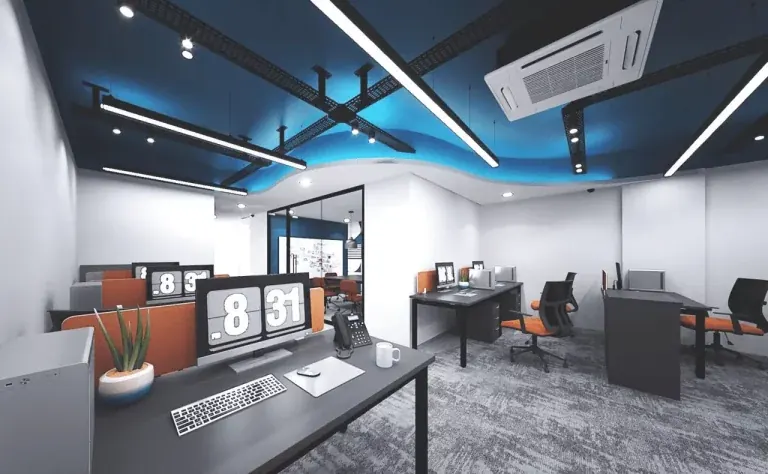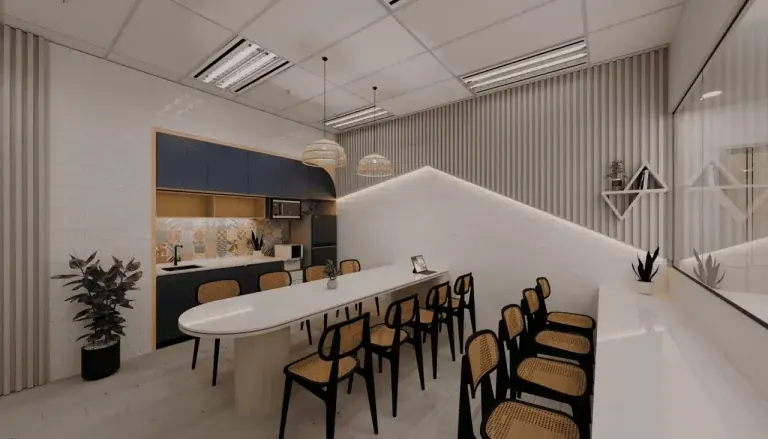
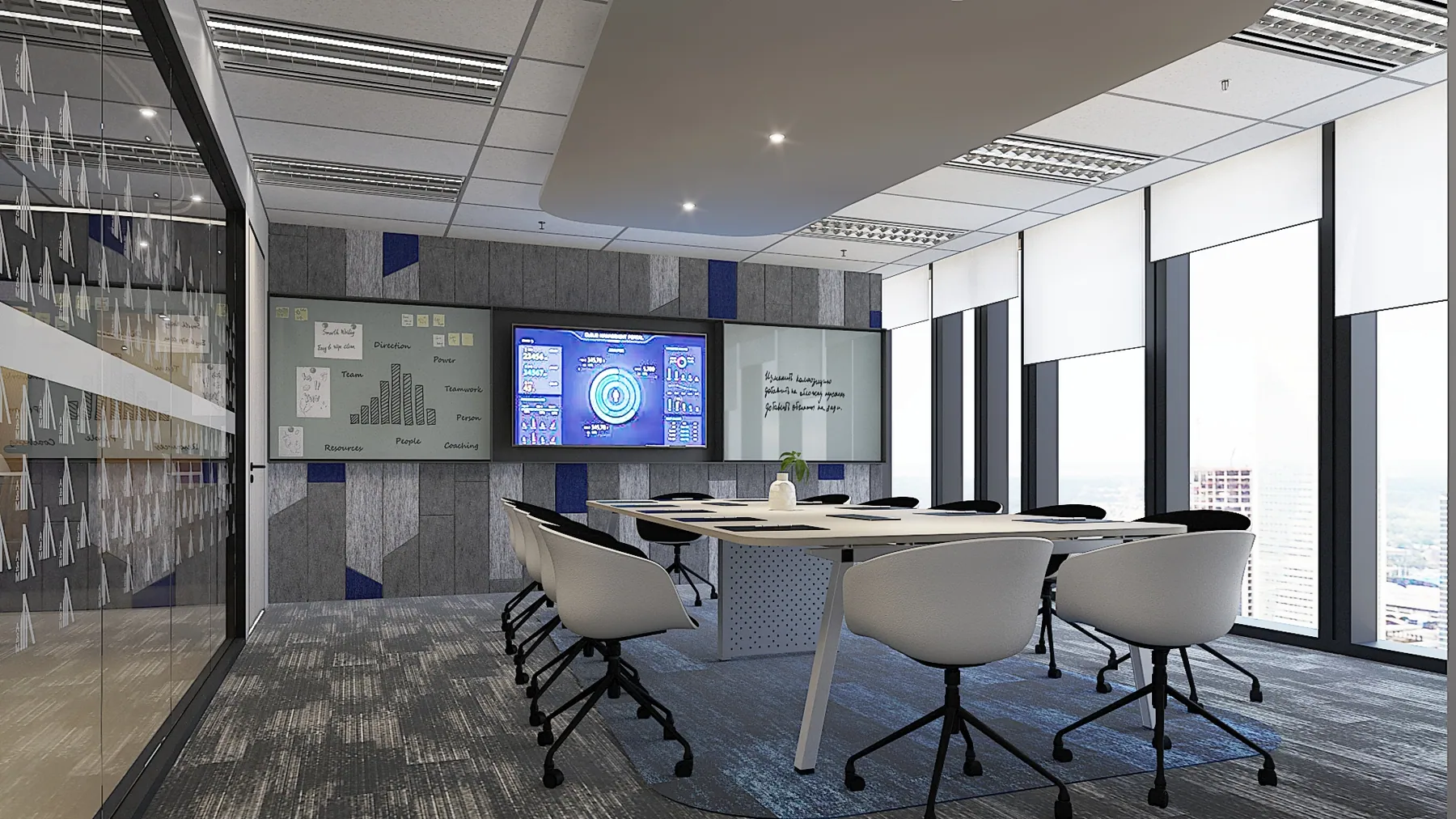
Search for an office interior designer in Malaysia and you will find three very different kinds of business under the same name. One is a single person with a laptop. One is a design studio that draws and then hands over. One designs and builds the whole floor.
Most online advice compares them on price and personal attention. That is the home-renovation view. For an office, the bigger questions are who is legally allowed to do the work, who carries the risk when something goes wrong, and how much rent a delay costs you.
This guide compares the three options on those points. It is written for business owners, office managers and admin or HR leads planning a new office or a refit. CTN Interior Solutions has designed and built offices in Malaysia since 2001, so we see all three models on real projects.
Not sure which model fits your project?
Talk through your floor, headcount and timeline with a consultant before you shortlist anyone. Speak to an office interior design consultant →
The short video below, from a construction management educator, explains the difference between design and build and the traditional design-then-tender route. The Malaysian specifics follow it.
What Is Design Build vs. Design Bid Build?
Source video: Jason Schroeder, on YouTube
1What Are Your Options When Hiring an Office Interior Designer?
Quick Answer: You have three main options. A freelance designer works alone and usually stops at drawings. A design studio produces a full drawing set and helps you appoint a separate contractor. A design and build firm designs the office and builds it under one contract, through to handover.
| Option | What you get | Who builds it | Typical fit |
|---|---|---|---|
| Freelance designer | Concept, layout and some drawings | A contractor you find and manage | Small refresh, one or two rooms |
| Design studio | Brief, full drawing set, tender support, site visits | A contractor you appoint after tender | Complex brief, strong in-house project team |
| Design and build firm | Design, approvals, construction, handover | The same firm | Most tenant fit-outs with a fixed move-in date |
These are business models. They say nothing about talent, and a gifted freelancer can out-design a large firm. The difference is how many contracts you sign, how many parties you coordinate and where responsibility sits when the drawing and the build do not match.
Our guide to the interior designer’s role versus the architect and contractor on an office job explains who signs what. If you are also weighing renovation contractors and furniture suppliers, see our breakdown of office interior company types.
2How Many Registered Interior Designers Are There in Malaysia?
Quick Answer: The Board of Architects Malaysia (LAM) lists 731 registered interior designers and 38 registered interior design practices on its website as of October 2026. In August 2021 it had registered 606 interior designers and 72 practices. Many people offering office interior design are not on either list.
| Register | Aug 2021 | Oct 2026 |
|---|---|---|
| Registered interior designers | 606 | 731 |
| Graduate interior designers | – | 278 |
| Interior design practices: sole proprietorship | 44 | 20 |
| Interior design practices: partnership | 2 | 1 |
| Interior design practices: body corporate | 26 | 17 |
| Interior design practices: total | 72 | 38 |
Sources: StarProperty (August 2021 figures quoted by the interior design institute); Board of Architects Malaysia website statistics, viewed 14 October 2026. Counting bases may differ between the two dates.
The LAM register compares with 2,635 registered architects. StarProperty reported in 2021 that unregistered people offering interior design services can be charged under Section 33(e) of the Architects Act 1967, with a fine of up to RM50,000, two years’ jail, or both.
What this means for an office tenant:
- Registration shows training and a code of conduct. It does not show office experience, so check that separately.
- Ask whose name is on the drawings. In a studio or D&B firm, the designer may be an employee working under the firm’s practice.
- The builder needs separate registration. Whoever builds must be registered with CIDB, as below.
Our list of 15 questions to ask an interior designer for an office covers how to raise this without sounding hostile.
3Who Carries the Risk Under Each Option?
Quick Answer: With a freelancer, you carry most of the coordination and cost risk yourself. With a design studio, the designer and contractor each carry part, and you manage the gap between them. With a design and build firm, one party carries design, cost and programme risk under a single contract.
| Risk | Freelancer route | Studio route | D&B route |
|---|---|---|---|
| Brief and space plan | Shared | Firm | Firm |
| Drawings match the site | You | Firm | Firm |
| Landlord and council approvals | You | Shared | Firm |
| Contractor selection | You | Shared | Firm |
| Cost overruns from design gaps | You | You | Firm |
| Site coordination of trades | You | Shared | Firm |
| Programme and move-in date | You | Shared | Firm |
| Defects after handover | You | Shared | Firm |
Illustrative matrix by CTN Interior based on typical Malaysian office fit-out contracts. “You” = the tenant; “Shared” = split between parties; “Firm” = the appointed firm. Your contract terms decide the real split.
Read across the “Cost overruns from design gaps” row. When a separate contractor prices a drawing that misses a sprinkler clash or a column, the contractor claims a variation. The designer says it was buildable. You pay while they argue.
Under design and build, that gap belongs to the firm because it drew and priced the same drawing. You still carry the risk of changing your mind, so a firm brief matters on every route. After handover, the same logic applies to defects, as our guide to what happens after handover explains.
4When Does a Freelance Designer Make Sense for an Office?
Quick Answer: A freelancer makes sense for small, low-risk jobs: refreshing finishes, restyling a reception, or planning furniture in an existing office with no new walls, ceilings or air-conditioning changes. Once the job needs approvals, several trades or a fixed move-in date, the coordination load usually outgrows one person.
Good reasons to hire a freelancer:
- The scope is cosmetic. Paint, loose furniture, graphics and lighting accents in rooms that already work.
- You have a builder you trust. Someone on your side can run the site and manage payments.
- You want ideas, not delivery. A concept or mood board to brief a larger team later.
Watch for warning signs: no written scope, no professional indemnity cover, and drawings with no ceiling, power or data plans. In most Malaysian office towers, the landlord’s fit-out guide also asks for full drawings and a registered contractor before work starts, which a one-person setup may struggle to produce. Capacity is the other limit: a two-week illness mid-project has no backup.
For small floors, our guide to interior designers for offices under 2,000 sq ft covers which costs shrink and which do not. If you only need styling, our comparison of an office interior decorator and a designer may be the better starting point.
Want one contract from design to handover?
Our workplace design and build team plans, prices and builds your office under one agreement. Explore workplace design and build →
5When Is a Design Studio the Better Choice?
Quick Answer: A design-only studio suits organisations that want the design fixed before builders compete on price, have a strong in-house project or facilities team, or must follow a formal tender policy. You gain independent advice and price competition, but you manage two contracts and the gap between them.
Typical cases where a studio fits well:
- Procurement rules require tenders. Listed companies, government-linked firms and regional head offices often must tender construction separately.
- The brief is unusual. A highly creative studio, a lab or a heavy AV fit-out may need specialist design input first.
- You have an owner’s representative. Someone on your side can manage the designer-contractor interface.
The trade-off is time and interfaces. Tendering adds weeks, and every query from the contractor goes back to the studio. Our stage-by-stage consultancy guide shows where those weeks go, and our guide to when you actually need a design consultancy sets out the triggers.
Agencies and start-ups often pick studios for their creative edge. Our creative office design ideas for agencies and start-ups show which ideas survive growth and lease end, whichever model you choose.
6Why Does a Single Point of Responsibility Matter?
Quick Answer: Construction payment disputes in Malaysia are common. Adjudication cases registered with the Asian International Arbitration Centre rose from 29 in 2014 to a peak of 816 in 2019, and stayed above 500 a year to 2023. Fewer contracts means fewer places for a payment dispute to start.
| Year | Relative volume | Registered | Change |
|---|---|---|---|
| 2014 | 29 | – | |
| 2015 | 199 | +170 | |
| 2016 | 461 | +262 | |
| 2017 | 708 | +247 | |
| 2018 | 773 | +65 | |
| 2019 | 816 | +43 | |
| 2020 | 537 | −279 | |
| 2021 | 530 | −7 | |
| 2022 | 508 | −22 | |
| 2023 | 518 | +10 |
Source: Asian International Arbitration Centre (AIAC), Annual Report 2023, adjudication case registration since 2014. Covers all construction work, not only offices.
The AIAC Annual Report 2023 counts 5,079 cases over ten years under the Construction Industry Payment and Adjudication Act 2012. These cover all construction, so they say nothing about offices directly. They do show how often payment chains break down.
On an office fit-out, each extra contract is another payment chain:
| Route | Typical main contracts | Where a dispute can start |
|---|---|---|
| Freelancer route | 4 or more | Designer, builder, M&E, furniture, IT |
| Studio route | 2 to 3 | Designer versus contractor on design gaps |
| D&B route | 1 | Between you and the firm only |
Whoever builds must also be registered. CIDB states that contractor registration has been mandatory since 20 July 1995, with fines of RM10,000 to RM100,000 for breaches. Our guide to vetting commercial renovation contractors and our look at what one-stop office renovation really bundles go further.
7What Does a Late Handover Cost in Rent?
Quick Answer: At JLL’s Q2 2026 average Kuala Lumpur office rent of RM6.88 per sq ft a month, a 5,000 sq ft office costs about RM7,940 a week in rent. A four-week delay to move-in costs roughly RM31,750, often while you also pay rent on the old office.
| Floor size | Delay: 2 wks (light), 4 wks, 8 wks (dark) | 2 weeks | 4 weeks | 8 weeks |
|---|---|---|---|---|
| 3,000 sq ft | RM9,526 | RM19,052 | RM38,105 | |
| 5,000 sq ft | RM15,877 | RM31,754 | RM63,508 | |
| 10,000 sq ft | RM31,754 | RM63,508 | RM127,015 |
Modelled estimate by CTN Interior: area × RM6.88 × 12 ÷ 52 × weeks. Rent from JLL’s Q2 2026 Kuala Lumpur average via Real Estate Asia. Illustrative only; excludes service charges and double rent on the old office.
Delays come from the places responsibility changes hands: a late drawing, a tender that runs over, a contractor query nobody answers. JLL’s Q2 2026 figures put the Kuala Lumpur average at RM6.88 per sq ft, so the arithmetic above is a fair guide for the city. Rents in Petaling Jaya and other Klang Valley areas are lower, so scale it down there.
Two habits protect your date on any route:
- Plan backwards from move-in. Our week-by-week office fit-out timeline shows the usual stages.
- Test the floor before you sign. A test-fit before you lease catches problems while you can still negotiate fit-out time.
Have a move-in date to protect?
Our office fit-out team plans the programme backwards from your date and manages every trade on site. See our office fit-out service →
8How Do You Choose the Right Office Interior Designer?
Quick Answer: Start with your scope, deadline and in-house capacity, then pick the model, then shortlist firms within it. Compare portfolios of offices, not homes, check registration for both design and build, and compare quotes on the same scope so the cheapest number is not simply the shortest list.
- Define the scope: Note floor size, headcount, and whether walls, ceilings or M&E will change.
- Fix your deadline: Work back from lease start and the old office’s end date.
- Check your own capacity: Decide who on your side can manage contracts and site queries.
- Pick the model: Freelancer for cosmetic jobs, studio for tendered complex jobs, D&B for most fit-outs.
- Shortlist on office work: Ask for completed offices of a similar size, with client contacts.
- Compare like for like: Request quotes against the same scope and drawing list.
For the shortlist, our guide on how to judge an office designer’s portfolio helps, and our method to compare three fit-out quotes fairly keeps prices honest. Fee structures differ by model, as our article on lump sum, percentage and per sq ft fees explains.
For the bigger picture, our complete 2026 guide to office interior design in Malaysia covers every stage, and our round-up of office interiors and design trends in Malaysia for 2026 shows what clients are asking designers for now.
9Conclusion: Match the Model to the Risk You Can Carry
Quick Answer: A freelance office interior designer saves money on small jobs. A studio gives independence for complex, tendered work. A design and build firm gives one contract and one party answerable for the result. Pick the one whose risks you can actually manage.
Most tenants in Malaysia have a fixed move-in date and a small internal team. For them, fewer contracts usually means fewer surprises. When you are ready to compare options on your own floor, our office interior design consultants can start from your headcount and timeline.
10Frequently Asked Questions
1. Is a freelance interior designer cheaper for an office?
The design fee is often lower, but you take on contractor selection, site coordination and the cost of design gaps. On jobs with new walls, ceilings or M&E work, those costs can outweigh the saving.
2. Does an office interior designer need to be registered in Malaysia?
Interior designers and interior design practices are registered with the Board of Architects Malaysia. Whoever builds the office must be registered with CIDB. Ask for both before you sign.
3. What is the difference between a design studio and a design and build firm?
A design studio produces drawings and helps you appoint a separate contractor. A design and build firm designs and builds under one contract, so it answers for both the drawings and the finished office.
4. Is design and build more expensive?
Not necessarily. You lose tender competition on the build. In return, the firm absorbs most design-gap variations and more of the programme risk. Compare total cost against the same scope.
5. Can I hire a designer first and choose a builder later?
Yes. That is the studio route. It works best when you have time for a tender and someone on your side to manage questions between the designer and contractor.
Planning your next office?
Tell us your floor size, headcount and move-in date. We will explain which delivery model suits it and what to do first.
Book a free consultation →