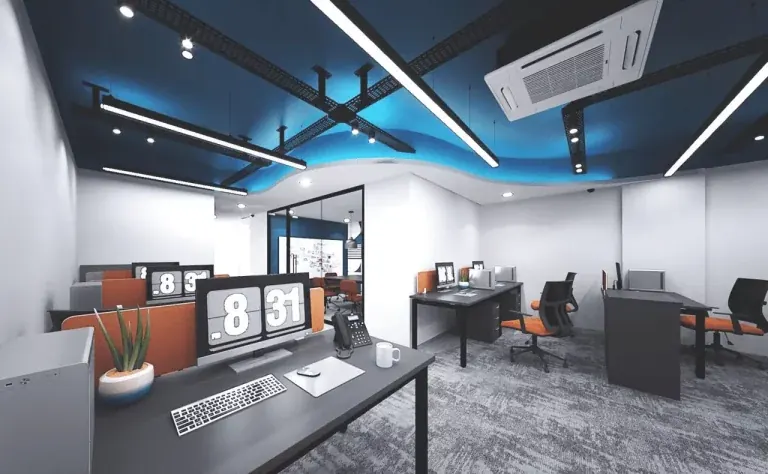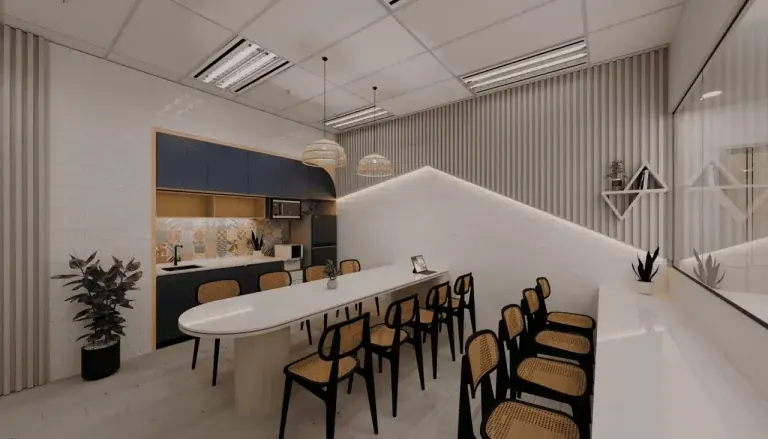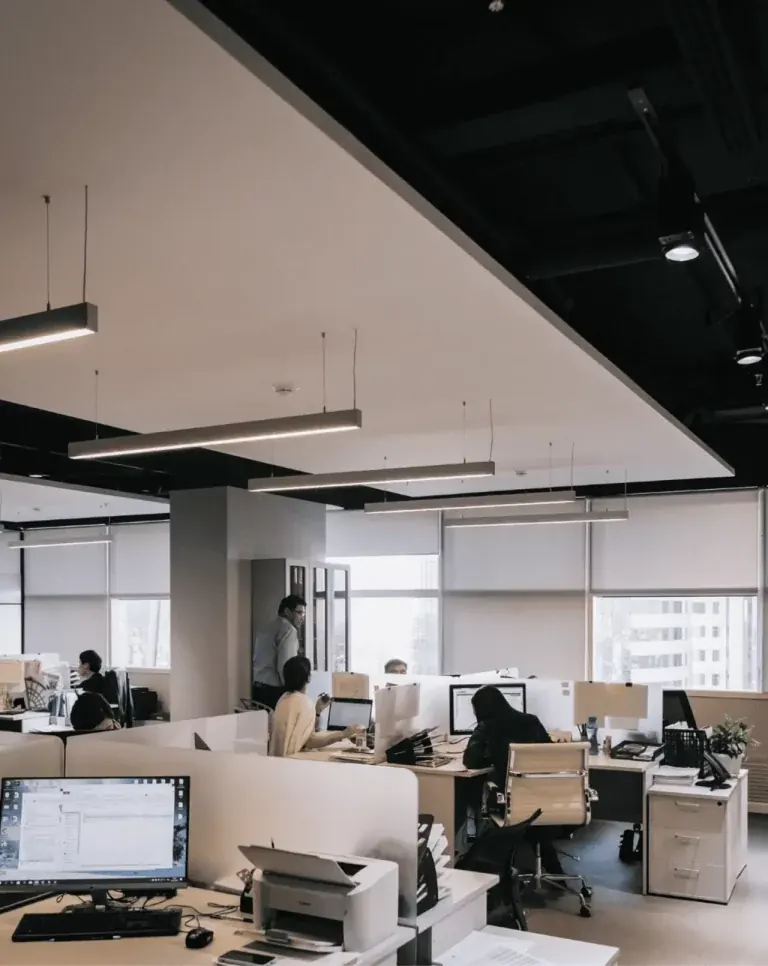
Most office design advice assumes people arrive at nine and leave at six. A business process outsourcing (BPO) floor does not. Agents serve clients in other time zones, so the office may run two or three shifts a day, seven days a week. Search for “BPO office interior design Malaysia” and you mostly find project photos; this guide covers what those photos cannot show.
It is written for operations heads and facilities managers setting up a contact centre or BPO site. It covers seat numbers, building services, running costs, night-shift lighting, security and staff amenities.
CTN Interior Solutions has designed and built offices in Malaysia since 2001. Modelled figures are labelled, and public data links to its source.
Setting up a new BPO site?
A single design and build team can plan the layout, building services and approvals for a floor that runs around the clock. See how workplace design and build works →
The short video below is from the Lighting Research Center, a university research centre in the United States. Dr Mariana Figueiro explains how lighting can ease the body-clock strain of shift work.
Lighting for Shift Workers
Source video: Lighting Research Center, on YouTube
1What Makes a BPO Office Different From a Normal Office?
Quick Answer: A BPO office is busier, denser and open for longer than a normal office. Seats are shared across shifts, agents spend most of the day on calls, client data must be protected, and every service from air-conditioning to the pantry has to work at night. Design for hours and use, not for headcount.
Malaysia’s outsourcing and global business services sector keeps growing. As Focus Malaysia reported from the GBS ASEAN Summit 2025, the number of GBS companies rose 66.8% to 749 in 2024. Investment grew from RM0.73 billion in 2021 to RM9.87 billion in 2024.
Five things set a BPO floor apart:
- Hours: two or three shifts a day, including weekends.
- Density: long rows of workstations and few private rooms.
- Noise: dozens of people talking into headsets at once.
- Client rules: clients audit security, data handling and continuity.
- Turnover: constant hiring keeps training rooms busy.
Our complete guide to office interior design in Malaysia covers the basics every office shares. If your site serves a regional or global head office, our guide to MNC office design in Malaysia explains how their standards meet Malaysian rules.
2What Changes When an Office Runs 24/7?
Quick Answer: Almost every building service needs a night-time answer. Air-conditioning, lifts, access control, power backup, cleaning and food all assume office hours by default. On a 24/7 BPO floor, they become critical, while finishes and furniture need tougher specifications because they are used three times as hard.
| Design element | Office hours | 24/7 BPO floor | Change |
|---|---|---|---|
| Air-conditioning | Building AC, set hours | After-hours AC or tenant units | Critical |
| Power | Mains supply | UPS per seat plus generator | Critical |
| Access and security | Card access in office hours | 24-hour access, CCTV, guarded entry | Critical |
| Lifts and building entry | Normal lift service | Night lift and lobby access | Critical |
| Lighting | One setting all day | Zoned or tunable lighting | Upgrade |
| Furniture and chairs | Standard office grade | Heavy-use chairs and worktops | Upgrade |
| Pantry and rest | Pantry with coffee | 24-hour pantry, rest room, lockers | Upgrade |
| Reception | Staffed in office hours | Used mainly by day | Same |
Illustrative guide by CTN Interior Solutions, based on common practice for contact centre floors in Klang Valley office buildings. Your building, clients and operating model decide the final specification.
The four “critical” rows have one thing in common: they depend on the building, not just your fit-out. You can buy better chairs at any time. You cannot add a night lift service or a generator riser after the lease is signed.
Our guide to the drawing set an office floor plan designer should give you shows how drawings should capture power, data and services for every seat.
3How Many Seats Does a 24/7 BPO Floor Need?
Quick Answer: Size the floor to your busiest shift, not your total headcount. In our model, 300 agents on three shifts need about 165 seats, against 300 seats on a single day shift. At Kuala Lumpur’s average rent, that is roughly RM780,000 a year less in rent.
The model uses three shift patterns for the same 300 agents. Seats equal the largest shift plus 10% for handover; each seat takes about 70 sq ft including walkways and support rooms.
| Shift pattern | Seats | Floor area (sq ft) | Annual rent | RM |
|---|---|---|---|---|
| A. One day shift (all 300 agents) | 300 | 21,000 | 1,733,760 | |
| B. Two shifts (60% / 40%) | 198 | 13,860 | 1,144,282 | |
| C. Three shifts, 24/7 (50% / 30% / 20%) | 165 | 11,550 | 953,568 |
Modelled by CTN Interior Solutions. Seats = largest shift + 10% handover buffer; 70 sq ft of floor per seat (illustrative contact centre density); rent RM6.88 per sq ft per month (JLL Kuala Lumpur average, Q2 2026, via Real Estate Asia) × 12. Not a quotation.
Seat sharing is where a 24/7 site saves most of its money. It also creates three design jobs:
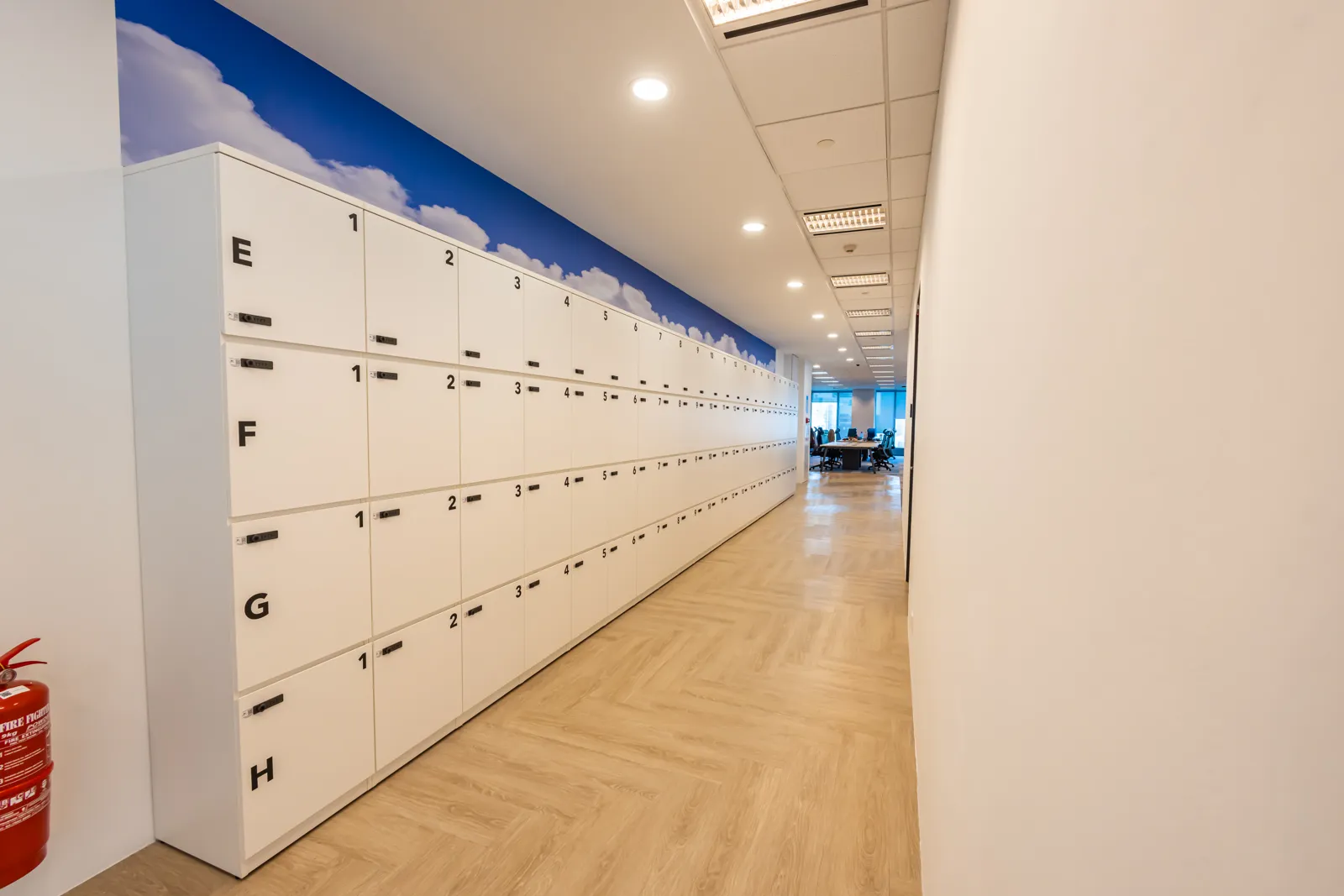
- No personal desks: agents need lockers instead.
- Fast handover: chairs and screens should adjust in seconds.
- Cleaning: worktops must handle wiping between shifts.
Our guide to the best call centre workstation design covers desk sizes, panel heights and cable routes for shared seats.
4What Should You Check in a Building Before Leasing a BPO Site?
Quick Answer: Check that the building can actually run at night. Ask how after-hours air-conditioning is supplied and charged, and whether lifts and the lobby stay open. Then confirm generator capacity, fibre routes and how the landlord handles security around a live 24/7 operation.
Many Malaysian towers run central AC on a fixed schedule and charge tenants for extra hours, which adds up fast on a 24/7 floor. Ask before you sign:
| Topic | Ask the landlord |
|---|---|
| Air-conditioning | How is after-hours AC supplied and charged, and can we add our own units? |
| Power | How much generator capacity can we reserve, and where can a UPS room go? |
| Access | Do lifts, lobby and car park stay open all night? |
| Risers and data | Can we bring in two separate fibre routes? |
A test-fit on each shortlisted floor shows how many seats it holds. Our guide to test-fits before you lease explains how.
Comparing floors for a contact centre?
An independent consultant can test each shortlisted floor against your seat count and night-time service needs. Talk to an office interior design consultant →
5How Much More Power Does a 24/7 Office Use?
Quick Answer: Roughly in line with the hours it runs. In our model, a 10,000 sq ft floor drawing an average of 50 kW costs about RM65,000 a year on office hours. Running 24/7, it costs about RM198,000, at Malaysia’s 45.40 sen per kWh average base tariff.
The model covers tenant lighting, computers, server room and tenant AC units, not landlord after-hours AC charges.
| Operating pattern | Hours a week | kWh a year | Annual cost | RM |
|---|---|---|---|---|
| Office hours (11 h × 5 days) | 55 | 143,000 | 64,922 | |
| Extended, 7 days (12 h × 7) | 84 | 218,400 | 99,154 | |
| Two shifts, 7 days (16 h × 7) | 112 | 291,200 | 132,205 | |
| Three shifts, 24/7 | 168 | 436,800 | 198,307 |
Modelled by CTN Interior Solutions. Assumed average tenant load 50 kW (about 5 W per sq ft) while operating; kWh = 50 × hours × 52 weeks; tariff 45.40 sen per kWh, the average base tariff from July 2025 (Bernama). Actual bills vary with tariff band, load and building.
Put this next to the rent model above. Moving from one shift to three adds around RM133,000 a year in power in this example, while seat sharing saves about RM780,000 in rent. It pays, if the floor saves energy where it can:
- Zone lighting and AC: switch down empty rows on the night shift.
- Cool the server room separately: so it does not chill the whole floor.
- Use LED and sensors: they pay back faster at 168 hours a week.
6How Should Lighting Work for BPO Night Shifts?
Quick Answer: Bright, cool light by day and controllable light at night. Researchers recommend at least 250 melanopic lux at the eye in the daytime and no more than 10 in the three hours before sleep. Night-shift agents need enough light to stay alert, plus dimmer, warmer areas for breaks.
Night work is hard on the body. In 2020, the International Agency for Research on Cancer classified night shift work as “probably carcinogenic to humans” (Group 2A). Lighting cannot remove that risk, but it can ease the strain.
| Time of day | Melanopic EDI at the eye | Lux | Design move on a BPO floor |
|---|---|---|---|
| Daytime | Minimum | 250 | Bright, cool-white light on the agent floor |
| Evening (3 h before sleep) | Maximum | 10 | Warm, dim light in break areas late in a night shift |
| Night-time activity needing vision | Maximum | 10 | Desk task lighting in the quietest hours |
| Sleep environment | Maximum | 1 | Dark rest room with blackout |
Source: Brown et al., “Recommendations for daytime, evening, and nighttime indoor light exposure”, PLOS Biology, 2022. Design moves are CTN Interior Solutions’ interpretation for office use.
On a real floor, this usually means:
- Tunable or zoned lighting: brighter early in a shift, softer later.
- Glare control: low-glare fittings and matt worktops.
- A dark rest room: apart from the bright agent floor.
Air and acoustics affect alertness as much as light. Our guide to light, air and acoustics in commercial offices explains the indoor air limits Malaysian offices work to.
7How Do You Design a BPO Floor for Client Security Audits?
Quick Answer: Plan security zones from the start. Most BPO clients expect controlled entry, CCTV, lockers outside the agent floor, clean-desk rules and secure rooms for servers and sensitive work. Building these into the layout is far cheaper than adding them before a client audit.
Client rules differ, but the layout patterns repeat:
- Layered access: lobby, staff area, production floor and restricted rooms, each card-controlled.
- Lockers before the floor: phones and bags stay outside.
- Segregated client areas: separate rooms when clients cannot share.
- Secure server and UPS rooms: locked, monitored, separately cooled.
- No paper on the floor: few printers, and shredding bins where printing is allowed.
Malaysia’s Personal Data Protection Act also applies to the customer data agents handle. Our guide to briefing a workplace design team with real data covers what to collect, and how to treat staff data, when you brief a designer.
8What Do Night-Shift BPO Staff Need Beyond a Desk?
Quick Answer: Night staff need the same amenities as day staff, open at any hour. That means a pantry for a real meal, a rest area, prayer rooms, lockers and a safe way in and out of the building. In Malaysia, prayer times and late-night transport shape these spaces more than décor does.
The Employment (Amendment) Act 2022 took effect on 1 September 2022. It removed the old Part VIII limits on night work by female employees and cut normal weekly hours from 48 to 45. Night rosters now mix everyone, so amenities must too.
| Amenity | Why it matters at night |
|---|---|
| 24-hour pantry | Food courts close, so staff need fridges, microwaves and seating. |
| Rest room | A dark, quiet space for short breaks reduces fatigue. |
| Prayer rooms | Rooms with ablution space serve every shift, including dawn prayers. |
| Safe arrival and exit | Lit routes to the lobby, car park or e-hailing pick-up. |
Our guide to localising a multinational office in Malaysia covers prayer rooms, pantries and nursing rooms.
9How Do You Plan BPO Office Interior Design in Malaysia, Step by Step?
Quick Answer: Fix the shift pattern and seat count, then check the building’s night-time services and collect client security rules. Next, plan zones, specify heavy-use furniture and controllable lighting, and commission every service before the first live shift.
These six steps turn a typical BPO office interior design Malaysia brief into a working floor:
- Fix the shift plan: Agree headcount by shift for launch and the next 12 to 24 months, then size seats to the largest shift.
- Check the building: Confirm after-hours AC, lift and lobby access, generator capacity and fibre routes before you sign the lease.
- Collect client rules: Gather each client’s security, segregation and business continuity requirements in one brief.
- Plan zones and layout: Arrange entry, lockers, production floor, training, restricted rooms and amenities without crossing secure zones.
- Specify for heavy use: Choose chairs, worktops, flooring and lighting rated for round-the-clock use.
- Commission before go-live: Test UPS, generator changeover, AC, access control and network under load before the first live shift.
For rows, clusters and pods, our guide to call centre layout design compares the main layouts. If your site also runs finance or HR processes, see our guide to shared services office setup. Build the office fit-out timeline around services commissioning.
Ready to plan the fit-out itself?
See what a full office fit-out covers, from the first drawings to services testing and handover. Explore our office fit-out service →
10Conclusion: Design the Floor Around the Clock
Quick Answer: The BPO office interior design Malaysia operators need follows the shift pattern. Size seats to the busiest shift, secure night-time services in the lease, zone lighting and power, plan for client audits and give night staff full amenities. The floor then works as well at 3am as at 3pm.
A 24/7 site can cost less per agent than a day-only office, but only if the building and services are planned for the hours it really runs.
11Frequently Asked Questions
1. How much space does a BPO office need per agent in Malaysia?
Often around 70 sq ft per seat including walkways and support rooms. On a 24/7 site, size seats to the busiest shift, not total headcount.
2. Can a normal office building support a 24/7 BPO operation?
Only if it offers after-hours AC, night lift and lobby access, 24-hour security and generator capacity. Check before signing.
3. Can women work night shifts in Malaysia?
Yes. The Employment (Amendment) Act 2022, in force from 1 September 2022, removed the old restriction on requiring female employees to do night work.
4. What lighting is best for night-shift workers?
Bright, cool light for the alert part of the shift, low glare, and dim, warm light in break and rest areas.
5. Does a BPO office need a generator and UPS?
Most do. Clients expect calls to continue through a power cut, so seats sit on a UPS backed by a generator.
Planning a BPO or contact centre floor?
Tell us your headcount, shift plan and shortlisted buildings. We will help you size the floor and plan services that keep running around the clock.
Book a free BPO floor consultation →